A.A Restoration Pros South River
📞 848-337-3690
Property Damage Restoration Elizabeth, NJ
24/7 Emergency Response

Water Damage Restoration in South River.

Burst pipes, dishwasher leaks, water heater failures, sump backups — full mitigation through reconstruction, billed direct to your carrier.

📞 848-337-3690 Local team in South River 24/7 dispatch
Local NJ-based, NJ-staffed
Methodology IICRC S500 / S520 / S700
Carrier Mix All major NJ carriers
Service Overview

How We Approach It

Three to five days of structural drying, sometimes longer for hardwood and dense substrate. We log moisture meter readings every 24 hours, reposition equipment based on what is actually drying, and only stop when readings return to dry-standard for each material.

What's Included

  • 24/7 emergency dispatch
  • Truck-mounted extraction
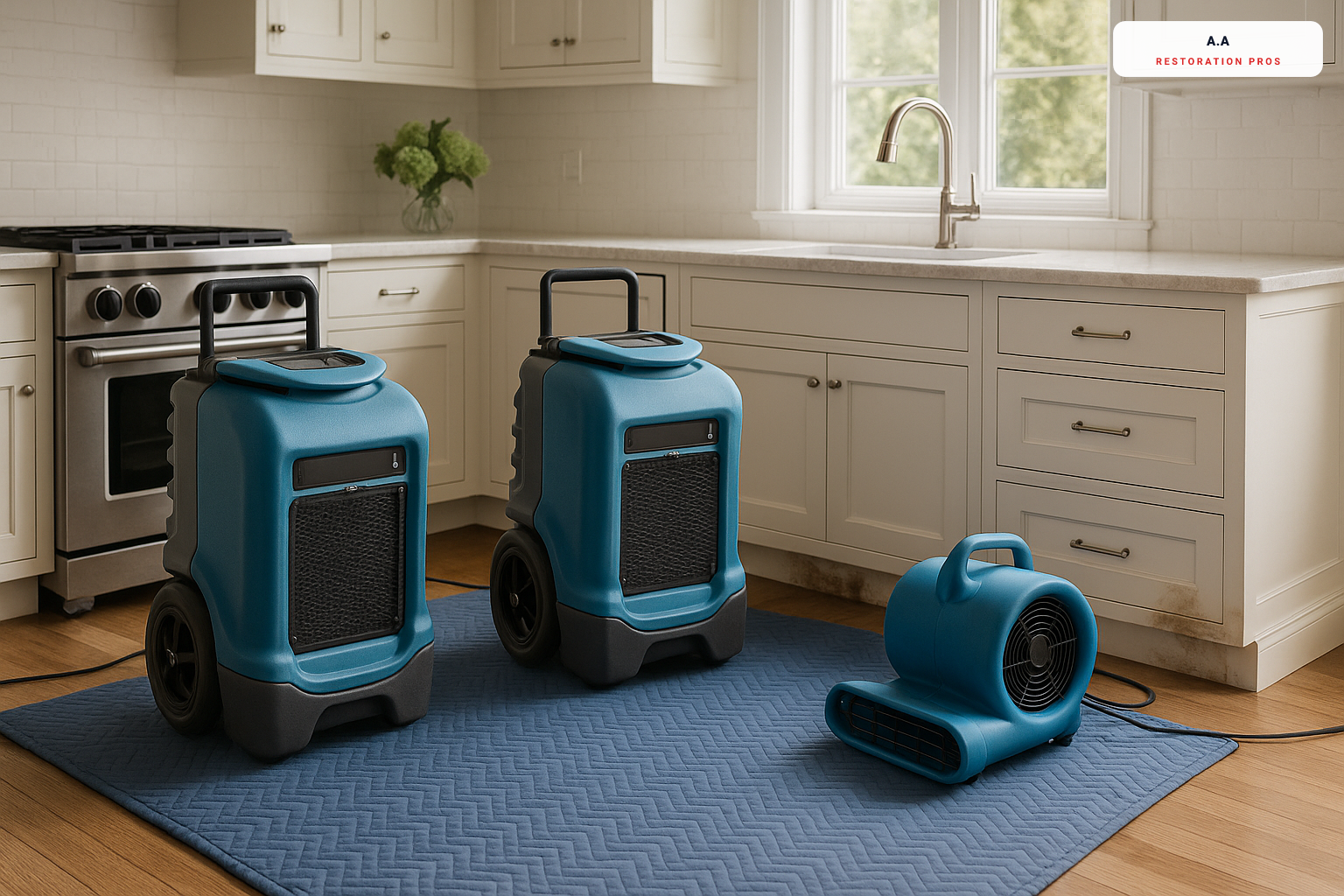
  • Industrial drying equipment
  • Daily moisture documentation
  • Insurance scope-aligned reconstruction
  • IICRC S500 protocol

Why Cutting Drying Short Is the Most Expensive Mistake

The single most common pattern that turns a $5,000 mitigation into a $40,000 mold remediation: a contractor who says "looks dry, we are done" at day three when the meter still reads above standard. Six weeks later, mold growth appears behind the wall, the carrier opens a separate claim or denies it as "improper drying," and the homeowner pays out of pocket.

Our protocol: equipment runs until every monitored substrate hits the dry standard documented for that specific material. If readings stall — which happens for hardwood + dense materials — we reposition equipment, add desiccant dehumidification if needed, and extend the run. Average residential job: 3-5 days. Hardwood-heavy jobs in older South River homes: sometimes 7-10 days. We give an honest timeline at the start and update if conditions change.

What this means for your insurance claim: every day of drying gets logged with equipment count + moisture readings. Adjusters see a complete record. No questions later about whether the job was completed properly. Mold prevention happens during drying — not after — and the documentation backs that up.

The Drying Process — What "Documented Dry" Actually Means

"Dry" is not "feels dry" or "looks dry." It is a specific moisture content reading for each substrate, measured with calibrated meters, that matches the manufacturer-approved dry standard for that material. Hardwood is different from drywall is different from concrete subfloor. We measure each separately, daily, until every wet substrate has returned to baseline.

The equipment that gets us there: high-velocity air movers (one per ~150 sqft of affected area) that move moist air off the substrate; LGR (low-grain refrigerant) dehumidifiers that pull that moisture out of the air; and HEPA-filtered negative air units when we need to contain a category-3 cleanup or prevent cross-contamination across rooms. All running continuously, monitored daily, repositioned when readings stall.

What clients sometimes ask: can the equipment run quieter? Yes — for occupied spaces we use noise-managed scheduling (loud during business hours, quiet overnight). What clients sometimes ask: can we just open the windows and skip the dehumidifier? No — outside humidity averages 60-80% in NJ, which means evaporated moisture from your substrate has nowhere to go and re-condenses. The dehumidifier exists specifically to extract the moisture from the air after the air movers release it from the substrate.

Process

Our Process

  1. 01

    A Real Person Answers

    No automated phone tree. No call-center. You get a live dispatcher who listens, asks the right questions, and tells you what we are sending.

  2. 02

    Same-hour Response

    Truck rolls out of South River dispatch with the right equipment for what you described. Average on-site time under an hour anywhere in Middlesex County.

  3. 03

    Honest Assessment

    We tell you what we see in plain language. What needs to come out, what can be saved, what the insurance discussion looks like, what the realistic timeline is.

  4. 04

    Document for Insurance

    Photos, moisture readings, written cause-of-loss narrative — all in the format your adjuster expects. We handle the documentation so you do not have to.

  5. 05

    Finish the Job

    Mitigation flows directly into reconstruction. Same crew, same project manager, same accountability. We do not hand off mid-project.

24/7 Emergency

Property loss in South River right now? Crew dispatched in minutes.

We dispatch a tech 24/7 across the South River metro. Average on-site time is under an hour.

Call 848-337-3690
The difference

Why Customers Choose Us

Real reasons. No invented stats, no manufactured awards.

  • 01

    IICRC Standards, No Shortcuts

    S500 for water, S520 for mold, S700 for fire. We follow the protocols because they are the only approaches that produce work that holds up. Adjusters approve our scopes; insurance closes our claims.

  • 02

    Fast Where It Matters

    Sub-60-minute response to active losses across Middlesex County. Pre-staged equipment for known surge periods. The first hour is what determines the eventual claim size — we get there fast and we are equipped on arrival.

  • 03

    Honest Cause-Of-Loss Documentation

    Sudden vs gradual, wind vs flood, supply line vs sewer — the framing determines coverage. We document accurately so the right policy pays the right portion. No inflating, no understating.

Service Area

Serving Middlesex County

Our South River dispatch covers a tight radius across Middlesex County. The compact service area is intentional — restoration work scales with response time, and minutes save material. East Brunswick, Sayreville, and Old Bridge all reach inside 30 minutes during normal traffic.

Counties Covered

  • Middlesex County, NJ

Cities We Service

Each Middlesex city below opens a local page with arrival times from our South River base and the loss patterns we handle most often in that municipality.

Not sure if you're in our area? Call 848-337-3690 and we'll tell you in 30 seconds.
FAQ

Frequently Asked Questions

If you don't see your question, just call or message us.

Do you offer free estimates? +

For property losses (water, fire, storm, sewage), we provide a no-cost on-site assessment and an Xactimate scope of work. For non-emergency reconstruction or mold remediation we provide a written estimate after on-site evaluation. We do not give phone-quote prices for restoration work — accurate scoping requires seeing the loss in person.

What happens if mold is found during the dry-out? +

If we discover existing mold growth during a water restoration job — which happens when a slow leak was already growing mold before the recent loss — we contain that area immediately and remediate per IICRC S520 before reconstruction starts. The discovery becomes a supplemental scope item for the carrier. Done correctly, both the water loss and the pre-existing mold get resolved as one coordinated project.

How do you document moisture readings for insurance? +

We map every wet substrate on a building diagram, take initial moisture readings with calibrated meters, log readings at every daily monitoring visit, and compare against the manufacturer's dry-standard for that material. Final clearance readings show every wet substrate returned to baseline. Adjusters get the full record — building diagram, meter readings by date, equipment run logs. This is what gets the claim approved without back-and-forth.

Do you handle storm damage to roofs? +

Emergency tarping yes — we secure compromised roof openings to prevent further weather intrusion. Permanent roof replacement we coordinate with a licensed roofing contractor in our network rather than doing in-house. The water damage that follows roof intrusion is our scope; the structural roof itself is a roofer's scope. We handle the coordination so you have one project manager not two.

What is the difference between mitigation and reconstruction? +

Mitigation is the emergency phase — stopping the loss, extracting water, drying the structure, removing damaged material. Reconstruction is the rebuild — replacing drywall, installing flooring, painting, finishing. Many restorers only do mitigation and hand the rebuild to a separate general contractor, which often creates scope-coordination problems. We do both as one contract so the rebuild matches what was scoped during mitigation.

Can I clean up the water myself before you arrive? +

You can extract surface water with a wet/dry vacuum and start moving content away from the cascade path — those help. Do not lift wet drywall (it crumbles and makes cleanup harder), do not run heaters trying to dry it yourself (you drive moisture deeper into materials), and do not throw damaged contents away before we document for insurance. The 30-60 minutes between your call and our arrival are worth using for documentation, not partial demo.

How long does a fire restoration job typically take? +

A small contained fire with smoke damage but no structural rebuild: 2-4 weeks. A significant fire requiring partial structural reconstruction: 6-12 weeks. A total loss requiring full rebuild: 4-9 months. The timeline depends on scope, material lead times, and insurance approval cycle. We give a realistic week-by-week schedule at the start.

Call Now • South River

Active Property Loss in South River? Truck Rolls Now.

One phone call gets a truck rolling. Real South River team, real local response time, no automated phone tree. We'll be on site fast.

📞 Tap To Call 848-337-3690

24/7 Emergency Dispatch

📞 Call 848-337-3690